
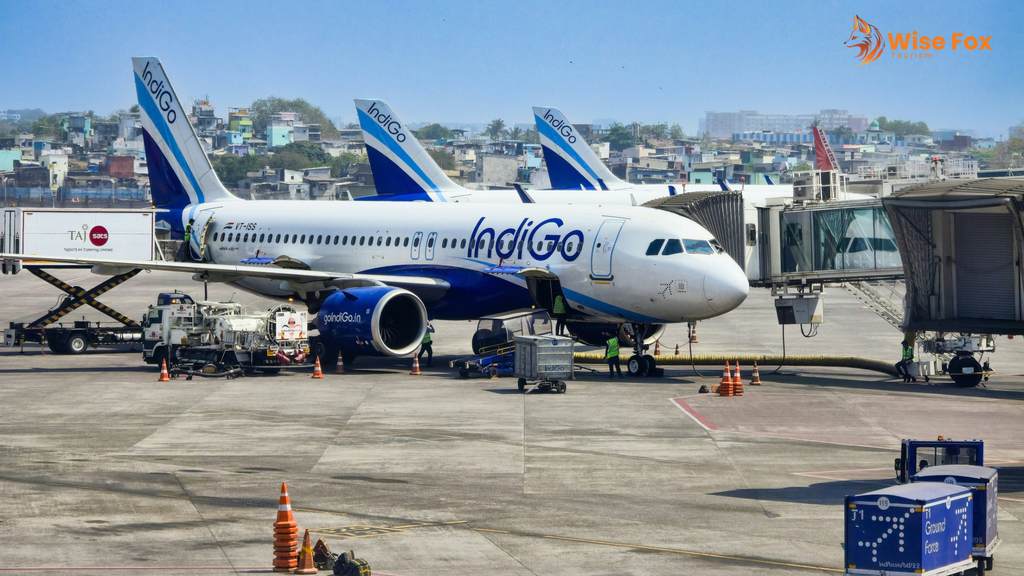
As of October 6, 2026, IndiGo revised its fuel charges for new bookings.
Consequently, passengers traveling between the UAE and India may face higher ticket prices, reflecting india-uae travel, flight update.
The change comes as aviation turbine fuel (ATF) prices have risen sharply. IndiGo has responded by increasing its fuel-charge component on both domestic and international flights. For UAE–India travelers, the important point is that the change does not mean every passenger will automatically pay the same amount more. The final airfare can still vary considerably depending on the route, travel date, demand, availability, fare type and other applicable charges.
For travelers planning a trip from Dubai, Abu Dhabi, Sharjah or another UAE emirate to India, this guide explains what has changed, who is affected, how much the fuel component is now, and the practical steps you can take to keep your total travel cost under control.
What has changed on IndiGo flights to India?
IndiGo revised its fuel charges effective October 6, 2026, with the new charges applying to new bookings made from that date.
For international flights, the newly reported fuel-charge structure includes:
| International region | Revised fuel charge per sector |
| SAARC, up to 500 km | ₹1,000 |
| SAARC, 501 km and above | ₹3,000 |
| Southeast Asia | ₹5,500 |
| GCC & Middle East | ₹5,500 |
| North & East Asia | ₹5,500 |
| Africa | ₹6,000 |
| Europe | ₹10,000 |
UAE–India flights fall within the GCC & Middle East category, for which the revised fuel charge is ₹5,500 per sector. That is approximately Dh210, depending on the exchange rate used for comparison.
What does “per sector” mean?
A sector generally means one flight leg.
For example, on a simple UAE–India return journey:
UAE → India = one sector
India → UAE = one sector
Therefore, a passenger making a return journey could have the fuel-charge component applied to both flight sectors.
However, the ₹5,500 figure should not be confused with a ₹5,500 increase in the ticket price. It is the revised fuel-charge amount. The increase compared with an earlier fare structure depends on the route and the charge that previously applied.
Will every UAE–India passenger pay Dh200 more?
No.
This is one of the most important points for travelers.
Recent estimates from UAE travel agents suggest that the overall airfare could increase by around Dh200 per passenger on some journeys, but this is not a universal increase applied to every ticket. A family of four could therefore see a significant increase in the total cost on some itineraries, but the actual amount depends on the booking.
Airline fares are made up of several components, including the basic fare, fuel-related charges, government and airport taxes and optional services.
IndiGo’s own conditions of carriage state that a customer’s tariff can include the basic fare, taxes, airline charges including the fuel charge, optional add-ons and government or airport fees. These components can change according to the applicable tariff.
That means a traveler should compare the final amount payable, rather than looking only at the fuel surcharge.
Why can two passengers get very different prices?
Airfares do not work like a fixed-price product.
Two people traveling from the same UAE airport to the same Indian city can book at different prices because airlines dynamically adjust fares according to factors such as:
-
- Travel dates
-
- Remaining seat availability
-
- Passenger demand
-
- Flight frequency
-
- Fare class
-
- How far in advance the ticket is booked
-
- Whether the journey is direct or connecting
-
- Optional services added to the booking
This is particularly important during busy travel periods when the cheapest fare buckets may sell out quickly.
For example, even if the same fuel charge applies to two passengers, one traveler may have purchased a lower base fare while another books after demand increases and pays a substantially higher total fare.
Are existing IndiGo bookings affected?
The revised fuel charges were announced for new bookings made from 00:01 on October 6, 2026.
Therefore, passengers who already purchased their tickets before the effective date should not assume that they need to pay the new charge simply because their travel date is after October 6. The announced change was tied to new bookings, not simply to when the journey takes place.
That said, travelers should always check the fare conditions attached to their specific booking before making any changes, cancellations or rebookings.
Why are IndiGo flights becoming more expensive?
The central reason is the increase in aviation turbine fuel (ATF) prices.
Fuel is one of the major operating expenses for airlines. IndiGo said fuel prices had continued to rise sharply, with the latest month-on-month increase exceeding 14%, pushing ATF costs to among their highest levels in the last decade.
When fuel costs increase substantially, airlines have several ways to manage the additional expense. One option is to increase fares or introduce or revise fuel-related charges.
IndiGo has said that fully offsetting the increase in fuel costs would require a much larger adjustment, but it chose a comparatively more moderate revision to reduce the impact on passengers.
Why could passengers traveling to South India feel the increase more?
The issue is not only the fuel charge.
Travel demand and seat availability also play a major role in determining the final fare. UAE–India routes, particularly popular routes serving South Indian cities, can become expensive when demand is strong and fewer seats are available.
Travel agents quoted in the recent UAE report have pointed to reduced flight frequencies on some routes. When there are fewer seats but strong demand, airlines have more scope to move passengers into higher fare categories.
This creates a situation where the fuel-charge revision may be only one part of the overall increase.
How much could a family of four pay?
Families should pay particular attention because even a relatively modest increase per passenger can become significant when multiplied across several travelers.
For illustration, an additional Dh200 per passenger in the overall fare would mean:
1 passenger: Dh200
2 passengers: Dh400
3 passengers: Dh600
4 passengers: Dh800
For a family traveling on a return itinerary, the total difference can be even more noticeable depending on the fares available for each sector.
These figures are only an illustration, not a fixed IndiGo fee. Actual ticket prices can be higher or lower.
How can UAE residents reduce the cost of India flights?
The fuel-charge revision is outside a passenger’s control, but there are several ways to reduce the impact of higher airfares.
1. Compare the total fare, not just the headline ticket price
A low advertised fare may not remain the cheapest option after taxes, baggage, seat selection and other services are included.
Always compare the final payable amount.
2. Check several travel dates
A difference of one or two days can sometimes have a larger effect on the final fare than the fuel-charge change itself.
Try checking:
-
- A weekday departure versus a weekend departure
-
- Different return dates
-
- Early morning or late-night flights
-
- Nearby travel dates before and after your preferred date
Flexibility can be particularly valuable during school holidays, Indian festivals and other peak periods.
3. Book before the cheaper fare buckets disappear
Airlines use different fare levels. Once the lower-priced inventory sells out, the next available fare can be significantly more expensive.
For high-demand UAE–India routes, waiting too long to book can therefore cost more than the fuel-charge adjustment itself.
4. Compare different UAE departure airports
Do not automatically check only the airport closest to your home.
Depending on the destination and date, compare flights from Dubai, Abu Dhabi and Sharjah where practical.
The saving in airfare should also be compared with the cost and travel time of reaching the alternative airport.
5. Check nearby Indian airports
Travelers may also benefit from comparing nearby Indian arrival airports where practical.
For example, someone traveling within a region may find a better overall deal by flying to a nearby airport and continuing by road or domestic transport.
The calculation should include the complete door-to-door cost, not just the airfare.
6. Be careful with optional add-ons
A cheaper base fare can become much more expensive after adding seats, meals, additional baggage and other services.
Before paying, review the complete booking summary and remove services you do not actually need.
7. Families should compare the whole booking
A family should not automatically assume that booking everyone together will always produce the lowest possible price.
The available fare inventory can affect the cost of multiple passengers. It is worth checking the final price for the complete group and understanding which fare type is being offered before payment.
For complicated or high-value family bookings, a reputable travel professional can also help compare options across dates and routes.
Should you book now or wait?
There is no guaranteed answer because international airfare is influenced by multiple moving factors.
Waiting could theoretically produce a lower base fare if demand weakens, but it could also produce a substantially higher fare if the cheaper seats sell out.
Travel agents quoted in the UAE report said it is difficult to predict how long higher fares will remain because prices depend on demand, seat availability and flight frequency.
A practical approach is to monitor the fare for your exact route and travel date instead of waiting simply because you expect prices to fall.
Will IndiGo reduce the fuel charge later?
It is possible, but there is currently no guarantee.
Fuel-related charges can change as operating conditions change. IndiGo has previously adjusted fuel charges in response to movements in ATF prices. In early 2024, for example, the airline removed its fuel charge after fuel prices declined.
The airline has also said it will continue monitoring fuel prices and make further adjustments when appropriate.
Passengers should therefore avoid assuming that today’s surcharge will remain unchanged indefinitely.
What should you check before paying for your ticket?
Before completing a UAE–India flight booking, check the following:
Final ticket price: Do not rely only on the advertised base fare.
Fuel charge: Understand what portion of the price is attributable to the current fuel charge.
Baggage allowance: Check whether the baggage included in the fare is sufficient for your trip.
Date flexibility: Compare nearby travel dates.
Departure airport: Compare UAE airports where convenient.
Arrival airport: Consider alternative Indian airports where practical.
Change and cancellation rules: Review the conditions before payment.
Family total: Calculate the cost for every passenger, including both directions.
Does the fuel surcharge apply to connecting flights?
The answer depends on the itinerary and how the individual flight sectors are ticketed.
A passenger on a connecting journey should not assume that one fuel charge covers the entire journey. Since charges can be applied per sector, travelers should examine the fare breakdown for each part of the itinerary.
This is particularly important when an itinerary contains multiple flight legs.
What happens if I need to change my IndiGo booking?
Changing a ticket can affect the total cost because the airline may apply applicable change fees, fare differences and other charges depending on the fare type and timing.
IndiGo currently publishes different rules for domestic and international changes, and the amount payable can depend on how much time remains before departure.
Do not cancel an existing ticket simply because you have seen news about the new fuel charge. First calculate the cost of canceling and buying a new ticket versus keeping the original booking.
The bottom line for UAE–India travelers
The latest IndiGo fuel-charge revision means that new bookings from October 6, 2026 can carry a higher fuel-related component.
For UAE–India travel, the revised international fuel charge for the GCC & Middle East category is ₹5,500 per sector, while the actual total airfare can vary considerably depending on the base fare, demand, availability and other charges.
The widely reported estimate of around Dh200 extra per passenger on some UAE–India journeys should therefore be treated as an example, not a guaranteed surcharge for every traveler.
For families, the financial impact can be much larger because the cost is multiplied across several passengers and potentially across both outbound and return sectors.
The best strategy is not simply to look for the cheapest advertised flight. Compare the complete journey cost, remain flexible with dates and airports, check baggage and add-on charges, and make your booking decision based on the final amount you will actually pay.
Frequently Asked Questions
Has IndiGo increased fares between the UAE and India?
IndiGo has revised its fuel charges for new bookings from October 6, 2026. The revision can increase the overall cost of UAE–India tickets, but the exact fare increase varies by itinerary.
How much is the new IndiGo fuel charge for UAE flights?
UAE routes fall under the GCC & Middle East category, where the revised fuel charge is ₹5,500 per sector.
Is ₹5,500 the amount passengers are paying extra?
No. ₹5,500 is the revised fuel-charge amount, not necessarily the increase compared with an earlier ticket.
Will passengers with existing bookings have to pay the new charge?
The revised charge was announced for new bookings made from October 6, 2026. Existing passengers should check their booking conditions before making any changes.
Why are UAE–India flights becoming expensive?
Higher fuel costs are one factor. Demand, seat availability, flight frequency, travel dates and base fares can also significantly affect the final price.
Can IndiGo fares become cheaper again?
Yes, fares and fuel-related charges can change as market conditions change. However, there is no guarantee that prices will fall on a particular route or date.
How can I save money on UAE–India flights?
Compare multiple travel dates, check different UAE departure airports, consider nearby Indian airports, compare the full fare including baggage and add-ons, and avoid waiting too long when demand is high.
Planning to travel from the UAE to India?
At Wise Fox Tourism, we help UAE residents with travel and visa-related services and can assist travelers in planning their journeys.
Call / WhatsApp: +971 58 504 2002
Email: info@wisefoxtourism.com
Website: www.wisefoxtourism.com
Airfares, fuel charges, taxes, baggage fees and airline policies can change. Always verify the final fare and applicable conditions before making payment.